 how-to
How to Repair Holes in Clothing by Hand: A Beginner's Guide
Last Updated: October 28, 2026
Quick Summary
To repair holes clothing needs one of two hand methods: darning for knitted fabrics, which rebuilds the loop structure, or patching for woven fabrics, which reinforces the grid. Assess the hole's size, location and fabric type first, then choose the method that matches.
- Darn knitted fabrics such as wool, cotton jersey and sweater knits, since darning follows the knit structure.
- Patch woven fabrics such as denim, twill and canvas, which hold their shape and suit a patch.
- Holes larger than 2 to 3 cm, or with fraying edges, need a patch or a darn that extends past the damage.
- Reinforce high-stress areas like elbows, knees and seat, not just the hole itself.
- Start with a small, simple item this week, such as a sock or knit hat, to build the skill.
Table of Contents
- Why Repairing Holes in Clothing Supports Sustainable Fashion
- Assessing the Hole: Size, Location, and Fabric Type
- How to Fix a Hole in Clothes: Choosing Between Darning and Patching
- How to Darn a Hole in Clothing on Knitted Fabrics
- How to Patch Clothes by Hand on Woven Fabrics
- Reinforcing Thinning Fabric and Stress Points Before They Tear
- Your Next Mend: Starting With a Hole You Can Fix This Week
- Frequently Asked Questions
Why Repairing Holes in Clothing Supports Sustainable Fashion
A small hole is often the reason a garment ends up unworn. A 2022 study on extending clothing lifetimes through repair and repurposing by L. Zhang found that mending and repurposing are practical ways to extend garment lifetimes and reduce the environmental cost of fashion.
Each mended item is one less purchase. That matters because new clothing carries the cost of production, shipping and eventual disposal. Keeping a sweater going for another season spreads those costs over more wear.
Repair also builds a useful skill. Once you can close a hole, you start noticing worn cuffs and loose seams earlier, before they become bigger problems.
Assessing the Hole: Size, Location, and Fabric Type
Before you pick up a needle to repair holes clothing needs, look closely at the damage.
How big is the hole? Small holes under a few millimetres can often be closed with a few stitches.
Where is it? Holes at elbows, knees, and seat areas take more stress.
What is the fabric? Knitted fabrics such as wool, cotton jersey, and sweater knits stretch and loop.
Check the edges of the hole too.
How to Fix a Hole in Clothes: Choosing Between Darning and Patching
Darning and patching are the two main hand-repair methods, but the right choice is not simply a matter of preference. Fabric structure, hole size, location, and how much stretch the area needs all determine which method will hold up. Use this decision guide to match the repair to the damage.
The three-question decision framework
Ask these questions in order:
- Is the fabric knitted or woven? Knitted fabrics (jersey, sweater knits, socks) stretch and loop. Woven fabrics (denim, twill, shirting, canvas) hold their shape. Darning rebuilds the loop structure of knits; patching reinforces the grid structure of wovens.
- How large is the hole, and are the edges fraying? Holes under about 1 cm with clean edges can often be darned or stitched closed. Holes larger than 2-3 cm, or any hole with thin, fraying edges, need a patch or a darn that extends well beyond the visible damage.
- Where is the hole, and will it be under strain? High-stress areas, elbows, knees, seat, pocket corners, underarm seams, need reinforcement beyond the hole itself. A simple darn or patch may fail there without added support.
Matching method to fabric and damage
| Fabric type | Small hole (<1 cm) | Medium hole (1-3 cm) | Large hole (>3 cm) or frayed edges | High-stress location |
|---|---|---|---|---|
| Knitted (wool sweater, cotton jersey, sock) | Darn | Darn with reinforcement | Patch (knit patch) or large darn | Darn plus reinforcement stitches |
| Woven (denim, twill, canvas) | Hand stitch or small patch | Patch | Patch | Patch plus reinforcement |
| Delicate (silk, fine knit, synthetic stretch) | Fine hand stitch | Darn with fine thread or patch with lightweight interfacing | Patch with lightweight interfacing | Avoid strain; reinforce with interfacing |
When darning is the better choice
Darning works best when:
- The fabric is knitted and you want the repair to flex with the garment.
- The hole is small to medium and the surrounding fabric is still sound.
- You want a flat, less visible repair (or a visible mend with contrasting yarn).
Darning rebuilds the fabric by weaving new thread across the hole, following the original knit where possible. It preserves stretch and drape.
When patching is the better choice
Patching works best when:
- The fabric is woven and does not stretch.
- The hole is large or the edges are fraying and need to be covered.
- The repair is in a high-stress area where a patch can be reinforced.
A patch can be applied to the inside for a hidden repair or to the outside for a visible one. For high-stress areas, place the patch on the inside and stitch through both layers.
The hybrid approach: darn plus patch
For medium-to-large holes in high-stress areas, combine methods. Darn across the hole to close it, then add a patch behind or over the darned area for extra support. This is common on denim knees and sweater elbows, where a single method may not last.
Visible mending as a deliberate choice
Visible mending, using contrasting thread, a patterned patch, or decorative stitching, is not just a style choice. It can be a practical way to reinforce a repair while acknowledging the garment's history. It also makes future wear easier to spot and mend early.
How to Darn a Hole in Clothing on Knitted Fabrics
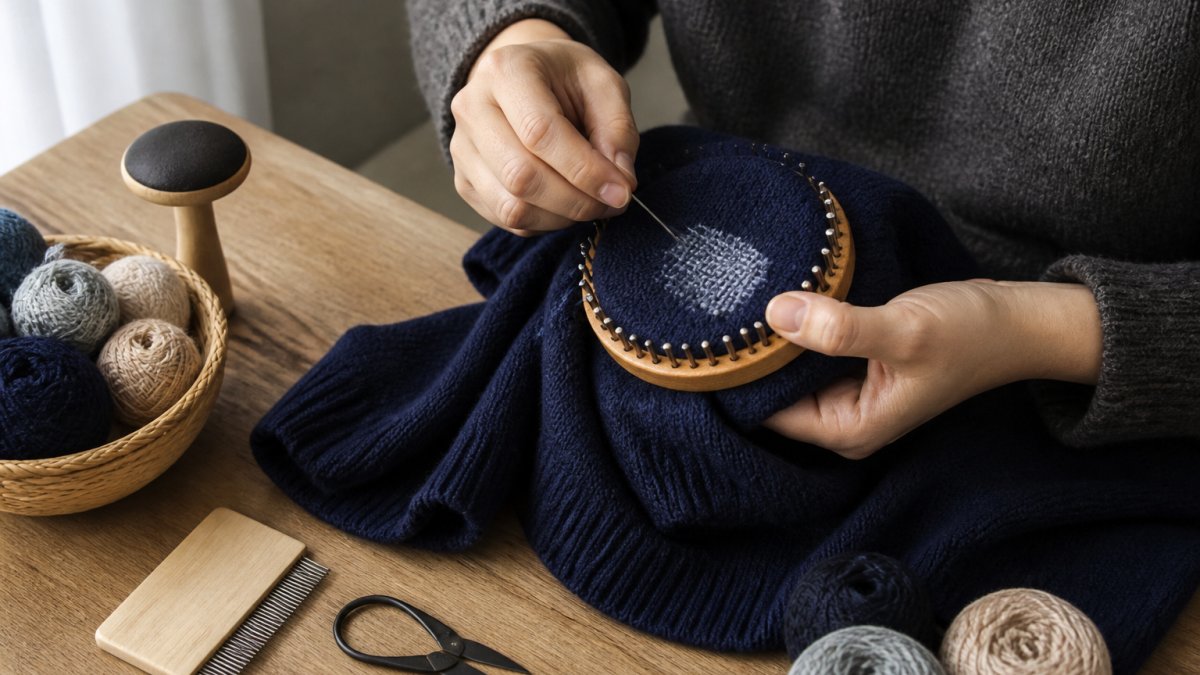
Darning works best on knitted fabric because the new thread can follow the knit structure. Follow the full step-by-step darning method to work through each stage with the thread in hand.
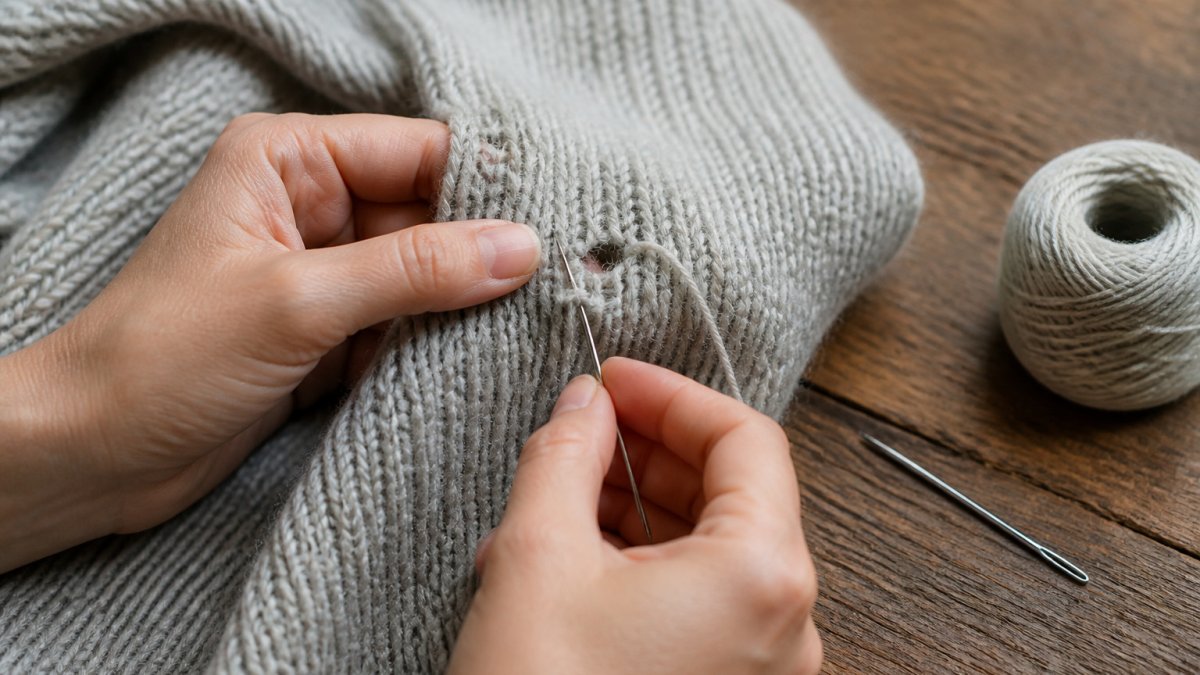
- Trim loose threads. Cut away any frayed ends so the edges sit flat.
- Anchor the thread. Start about a centimetre beyond the hole, on the good fabric, and secure it with a few small stitches.
- Lay the warp threads. Run straight stitches across the hole, one row at a time, leaving small gaps between rows.
- Weave the weft. Go over and under the threads you laid, following the original knit where you can.
- Finish and secure. Tie off on the wrong side and trim the tail.
Keep your tension even. Pulling too tight puckers the fabric. Leaving rows too loose leaves a gap.
Tip: If you are new to this, practise on a scrap of knit fabric first.
How to Patch Clothes by Hand on Woven Fabrics
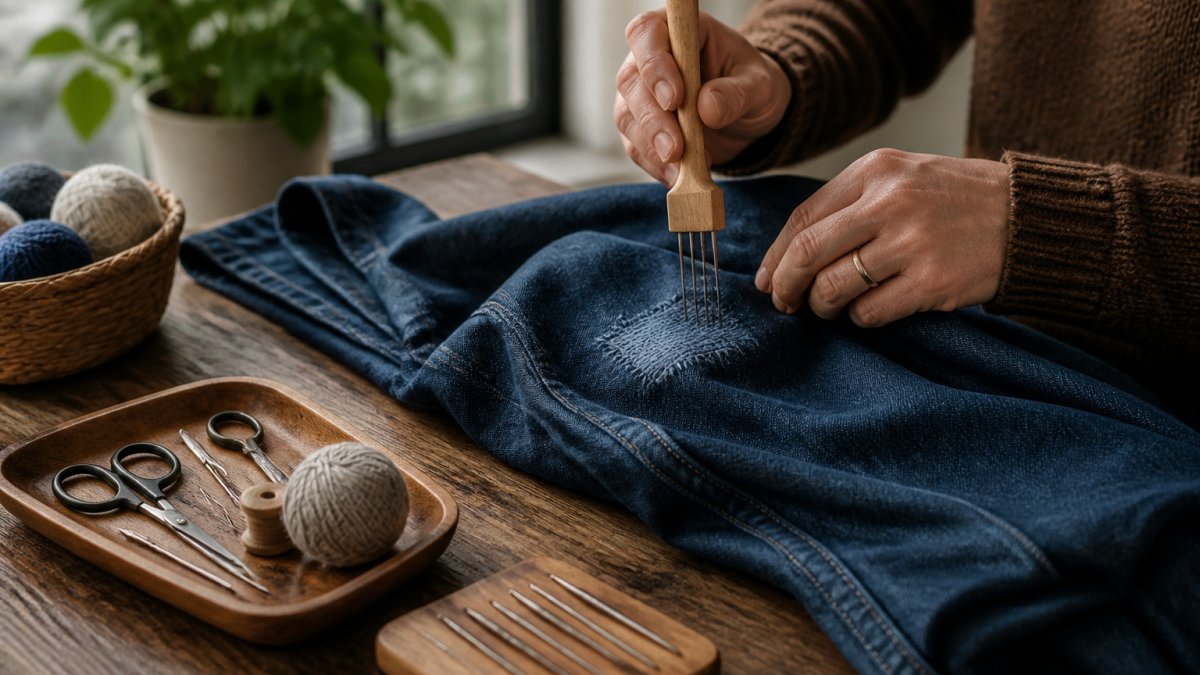
Woven fabrics suit a patch because the cloth does not stretch the way knits do. Read a broader beginner's guide to darning and clothing repair if you want the foundational technique first. Cut a patch from matching or complementary fabric, about 2 cm larger than the hole on every side.
- Prepare the patch. Turn under the raw edges by about 5 mm and press them flat.
- Position the patch. Pin it over the hole on the inside of the garment for a hidden repair, or on the outside for a visible one.
- Stitch around the edge. Use a small running stitch or whipstitch, keeping stitches close together.
- Trim the back. Remove any excess fabric that bulks up the repair.
Denim and canvas take a patch well. Use a thread strong enough for the job, such as a heavier cotton or polyester.
Reinforcing Thinning Fabric and Stress Points Before They Tear
Most holes do not appear out of nowhere. They start as thinning fabric, a loose seam, or a small wear spot that goes unnoticed until it becomes a tear. Reinforcing those weak points early is the most effective way to extend a garment's life, and it is a step most repair guides skip. Find five methods to repair thinning sweater elbows before they tear for specific ways to strengthen them.
Where to check first
Turn the garment inside out and inspect these high-wear areas:
- Elbows and knees, fabric thins from repeated bending and friction.
- Pocket corners and pocket bags, strain from hands and contents.
- Underarm seams and side seams, friction and sweat weaken threads.
Thinning often shows first on the inside as a lighter, fuzzy patch or as threads that look loose. Catch it there before it becomes a hole.
Reinforcement methods by fabric type
Knitted fabrics (sweaters, jersey, socks):
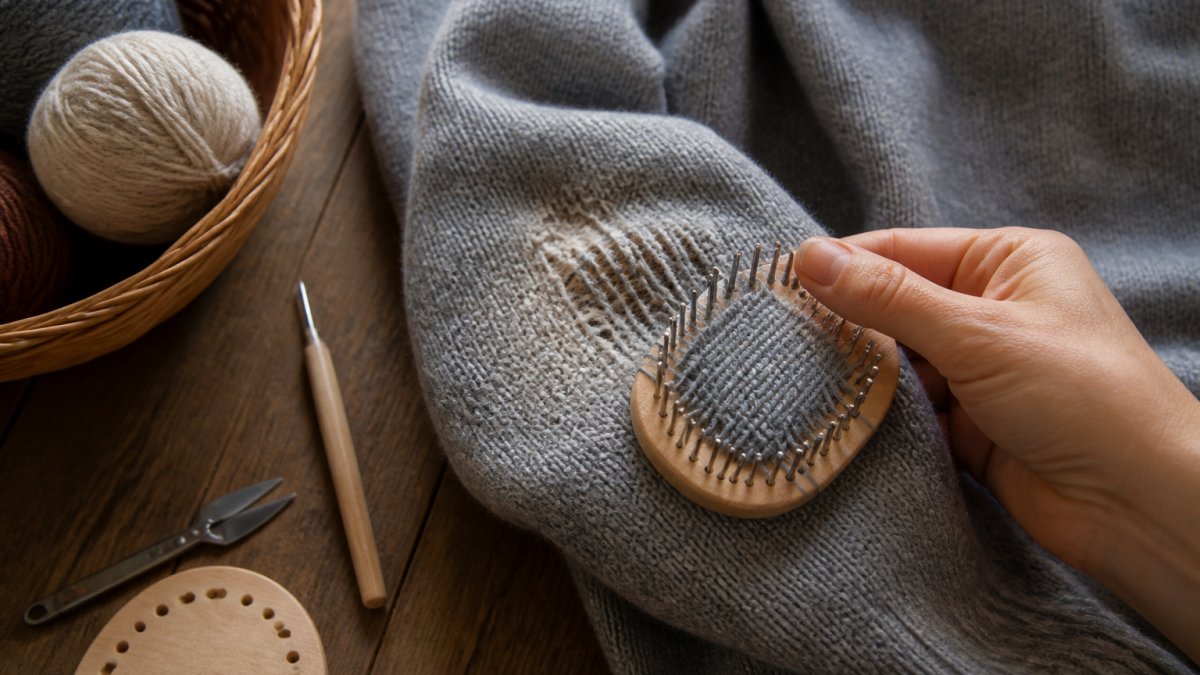
- Use a darning needle and matching yarn to work small stitches across the thinning area, following the knit direction. This adds a new layer of loops without stiffening the fabric.
- For larger thinning areas, a light knit patch on the inside, stitched with a flexible stitch, can spread the strain.
- Avoid dense, tight stitches that pucker the knit.
Woven fabrics (denim, twill, canvas, shirting):
- Sew a lightweight patch (cotton or polyester) on the inside of the thinning area, then stitch through both layers with a small running stitch or zigzag.
- For denim, a denim patch or a piece of similar-weight twill works well. Stitch around the perimeter and add a few rows across the center for support.
- On shirting and lightweight wovens, use a fine needle and lightweight interfacing as a patch to avoid bulk.
Delicate and stretchy fabrics (silk, fine knit, synthetic stretch):
- Use a fine needle and lightweight, stretchy interfacing on the inside. Stitch with a narrow zigzag or a fine hand stitch, keeping tension loose.
- Avoid heavy patches that restrict stretch and cause new strain at the edges.
Reinforcing seams and high-stress joins
Holes near seams need special attention because a simple patch may not address the underlying seam strain.
- Check the seam itself. If the seam threads are loose or broken, re-sew the seam first with a backstitch or a small running stitch, then reinforce the surrounding fabric.
- Add a seam guard. For high-stress seams (crotch, underarm), sew a narrow strip of lightweight fabric or twill tape over the seam allowance on the inside. This distributes strain along the seam rather than at a single point.
- Reinforce pocket corners. Sew a small triangle or bar tack at each pocket corner with heavy thread. This is a common ready-to-wear reinforcement that you can replicate at home.
Testing and maintaining a reinforcement
After reinforcing, gently stretch the area to check that the stitches hold and the fabric does not pucker. Wash the garment as usual and inspect the reinforced area after a few wears. If stitches loosen or the fabric still thins, add another layer of reinforcement before a hole forms.
Your Next Mend: Starting With a Hole You Can Fix This Week
Pick one item this week. Choose something small, such as a sock, a knit hat, or a sweater with a hole the size of a coin. Work through the assessment, choose darning or patching, and follow the steps above.
Your first repair will not be perfect. Funalya makes darning kits and speed looms built for beginners, with tools for small holes and larger worn sections, so you have what you need to keep your clothes in use. View Our Products when you are ready to start.
Frequently Asked Questions
How do you repair a hole in clothing?
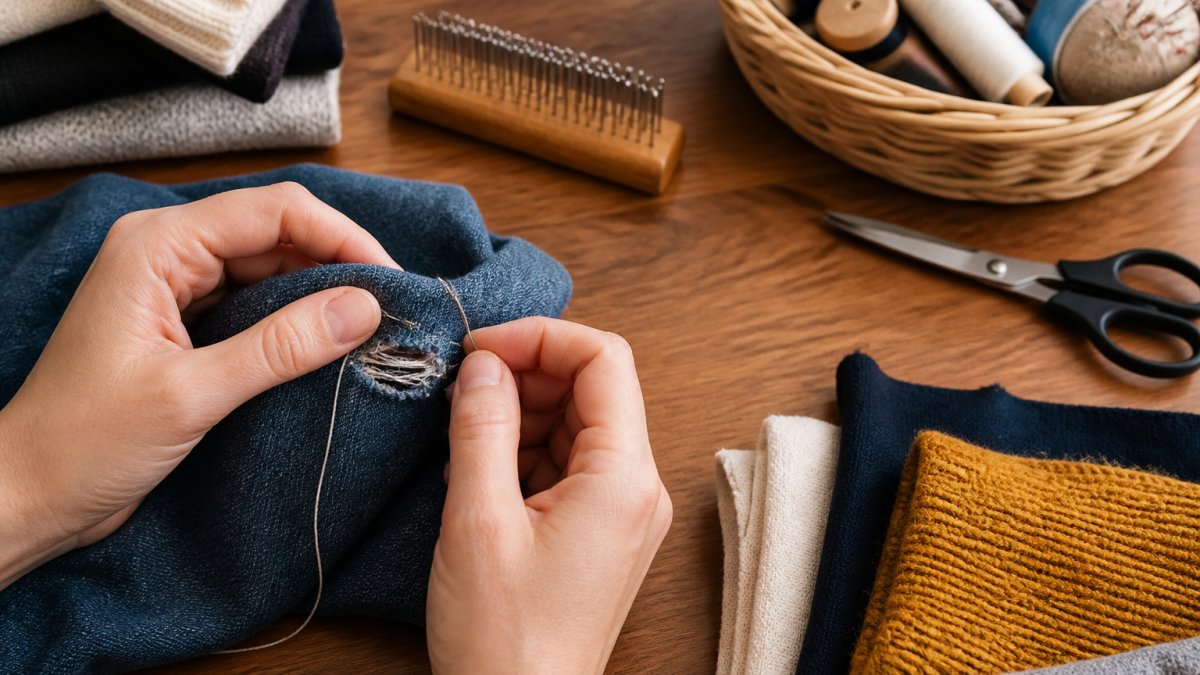
Start by trimming any frayed threads and assessing whether the hole is in a knit or woven fabric. For small holes in knitted garments, darning with a needle and matching yarn follows the existing stitch pattern and works well. For larger holes or woven cotton and denim, a hand-sewn patch on the inside gives the area support. Work slowly, keep tension even, and check the repair by wearing or washing the garment once. Cutting the fabric neatly before you begin makes the stitching easier and reduces further fraying around the damaged area.
When should you patch a hole instead of darning it?
Darning suits small holes in knitwear where you can recreate the weave with yarn. Patching is better for holes in woven fabrics such as shirts, jeans, and cotton trousers, or when the hole is larger than a few centimetres. A patch distributes stress across a wider area. Choose a patch fabric with similar weight and fibre content so the garment wears evenly. Place it on the inside for a discreet fix or on the outside if you want a visible mending look.
What tools do beginners need to mend clothes by hand?
A basic kit needs a few sharp needles in different sizes, thread or yarn matched to the garment, sharp fabric scissors, pins or clips, and a small scrap of fabric for patches. A darning egg or a flat piece of cardboard helps keep the fabric stretched while you work. Funalya offers darning kits and speed looms designed to make garment repair approachable. Start with one repair at a time so you learn the technique before taking on larger jobs.
How can repairing clothes help reduce textile waste?
Keeping a garment in use for longer delays the need to buy a replacement, which lowers demand for new textiles and the waste that follows when clothing is discarded. Research on clothing repair and repurposing, including work by L. Zhang and colleagues published in 2022, examines how extending garment lifetimes can reduce fashion's environmental impacts. Repairing a hole can be one way to keep clothing in use.