 how-to
How to Extend the Life of Frequently Worn Garments
Last Updated: November 8, 2026
Quick Summary
To extend garment life, wash frequently worn clothes less often, use cool water and gentle cycles, air-dry instead of tumble-drying, and mend small damage early. Spot-clean and air items between washes, since most outer layers can be worn several times before needing a full wash.
- Air or spot-clean outer layers like jumpers, jeans and jackets before washing them.
- Use cold or 30°C cycles with mild liquid detergent for most garments.
- Hang clothes to air-dry, since tumble dryers can shrink fibers and stiffen knitwear.
- Repair thin spots and loose stitches early, before small damage becomes a tear.
- A 2023 study estimated nine extra months of use could cut footprints by around 20-30%.
Table of Contents
- Why Frequently Worn Garments Wear Out Faster
- How to Care for Clothes Sustainably at Home
- How to Mend Clothes Before Small Damage Spreads
- Darning Holes in Clothes Step by Step
- Sashiko Mending for Reinforcing Worn Areas
- Measuring the Environmental Savings of Longer Wear
- Start Your Repair Kit for the Garments You Wear Most
- Frequently Asked Questions
Why Frequently Worn Garments Wear Out Faster
Your favorite sweater is probably not dying of old age. It is wearing out because you reach for it every week. Frequent wear, washing and drying add up, and the fibers pay for every cycle.
The good news is that you can slow this down. A 2023 study on practices that support maximum clothing use estimated that keeping clothes an extra nine months could cut carbon, waste and water footprints by around 20-30%.
Most clothes never get a second act. UniformMarket's fast-fashion statistics page reports that less than 1% of old clothes are turned into new ones. That makes keeping what you already own one of the most practical choices you can make.
Frequently worn garments face three main threats:
- Friction: Rubbing against bags, chairs and skin thins fabric at elbows, cuffs and seams.
- Heat and detergent: Hot water and harsh cleaners weaken fibers and fade color.
- Neglect: A small hole or loose button left alone quickly becomes a bigger problem.
A 2026 empirical study on garment service lifespan found that washing and drying practices can significantly affect a garment's physical lifespan. So the way you care for clothes matters as much as how often you wear them.
How to Care for Clothes Sustainably at Home
Caring for clothes well to extend garment life is less about special products and more about a repeatable routine. The goal is to reduce unnecessary washing, heat, and agitation while still keeping frequently worn garments hygienic and presentable. A practical routine has three decision points: whether to wash, how to wash, and how to dry.
Decide Whether to Wash, Spot-Clean, Steam, or Air
Most frequently worn garments do not need a full wash after every wear. Use this decision order before anything goes into the machine:
- Smell test first. If the garment smells clean, air it near an open window or in a ventilated room for a few hours. Odor is usually the first real signal that a wash is needed.
- Check for visible marks. A small stain on a cuff or collar can be spot-cleaned with a damp cloth and a drop of mild detergent, then blotted dry. Treat stains early; set-in stains often require a full wash or professional care.
- Consider steam for wrinkles and light odor. Steam can relax fibers and refresh garments between washes, especially for wool, silk, and tailored items. Hold the steamer a few centimeters from the fabric and keep it moving.
- Wash when soiled, sweaty, or worn against skin for a full day. Underwear, socks, activewear, and anything worn next to the skin generally need washing after one use. Outer layers such as jumpers, jeans, and jackets can often go several wears.
A common pattern is to wash knitwear and denim far more often than necessary. Unless visibly soiled or odorous, most practitioners find that airing and spot-cleaning between washes is enough.
Wash at Lower Temperatures and Match the Cycle to the Fabric
When a wash is needed, use the coolest temperature that will clean the item. Cold or 30°C cycles are gentler on fibers and colors and use less energy than hot cycles. Use a mild, liquid detergent for most garments; powder can leave residue on dark fabrics.
Match the cycle to the fabric type:
- Cotton and linen: A normal or gentle cycle at 30°C works for most everyday items. Turn dark items inside out to reduce surface fading.
- Wool and cashmere: Use a wool or delicate cycle at 30°C or lower with a pH-neutral wool detergent. Avoid regular detergent and never wring or twist wool when wet.
- Silk: Hand-wash in cool water with a mild detergent, or use a delicate cycle in a mesh bag. Do not soak silk for long periods.
- Activewear: Wash in cool water on a gentle cycle and avoid fabric softener, which can coat moisture-wicking fibers and reduce their performance.
- Denim: Wash inside out in cold water and hang to dry. Frequent washing fades indigo and weakens cotton fibers.
Watch out: Hot water and high-spin cycles can shrink wool, distort knitwear, and break down elastic in activewear, so check the care label before choosing a cycle.
Air-Dry and Follow Care Labels
Heat is hard on clothes. Tumble dryers can shrink fibers, stiffen knitwear, and wear down elastic over time. Hang garments to air-dry whenever possible, using hangers or a drying rack. Reshape knitwear flat to dry so it does not stretch out of shape.
Read the care label before the first wash. It tells you the safe temperature, whether tumble drying is allowed, and whether ironing is safe. Follow it, especially for wool, silk, and delicate blends. If a label says dry clean only, consider whether the garment truly needs it; many dry-clean-only items can be aired and spot-cleaned between professional cleanings.
How to Mend Clothes Before Small Damage Spreads
Small problems are cheap to fix. A thin patch of fabric or a single loose stitch takes minutes. Left alone, the same spot can tear wide open.
Look your wardrobe over every few weeks. To reinforce thin fabric before it tears, see guide to reinforcing worn fabric. Check the places that take the most wear: underarms, elbows, knees, pocket openings and collars. Mend anything that looks thin or loose.
Repair is also a skill worth building. A 2022 study on repair and repurposing describes these practices as powerful ways to extend clothing lifetime and reduce environmental impact.
Darning Holes in Clothes Step by Step
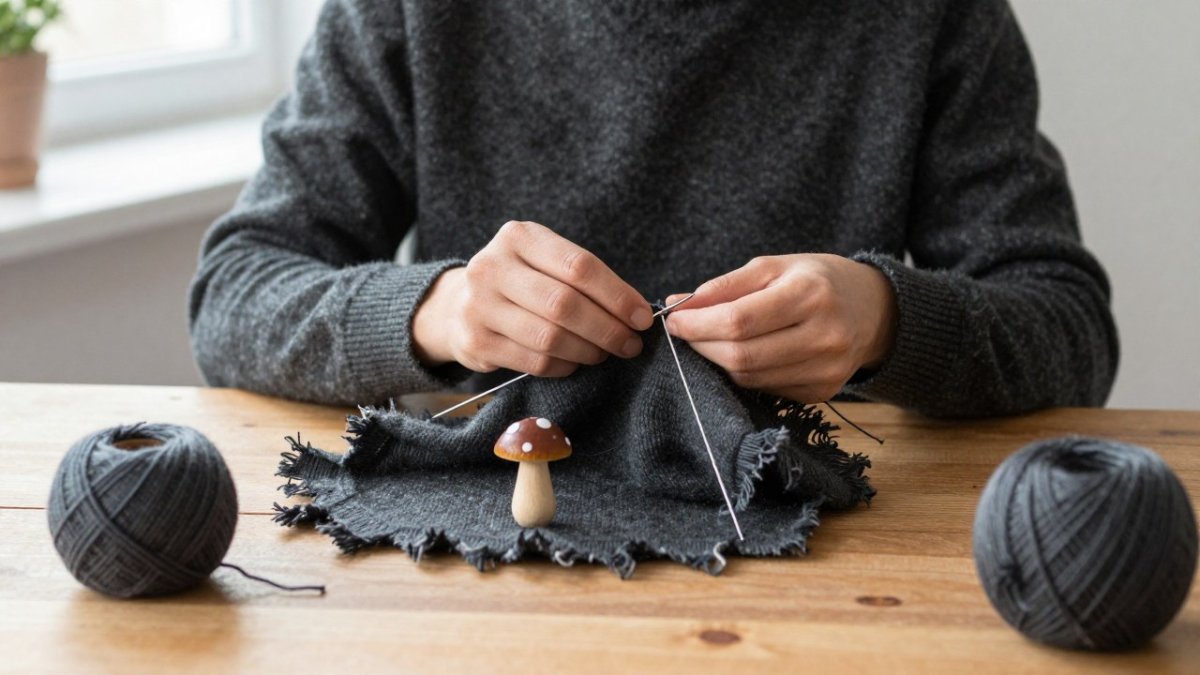
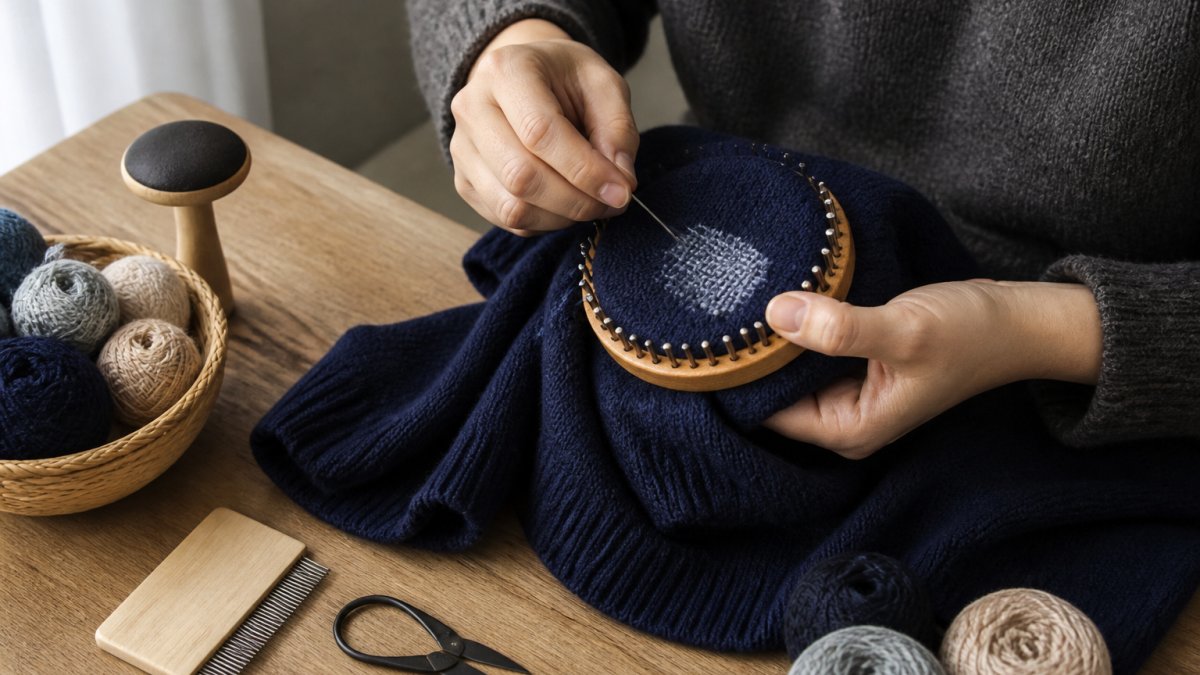
Darning weaves new threads across a hole to close it. It works well on knitwear and socks.
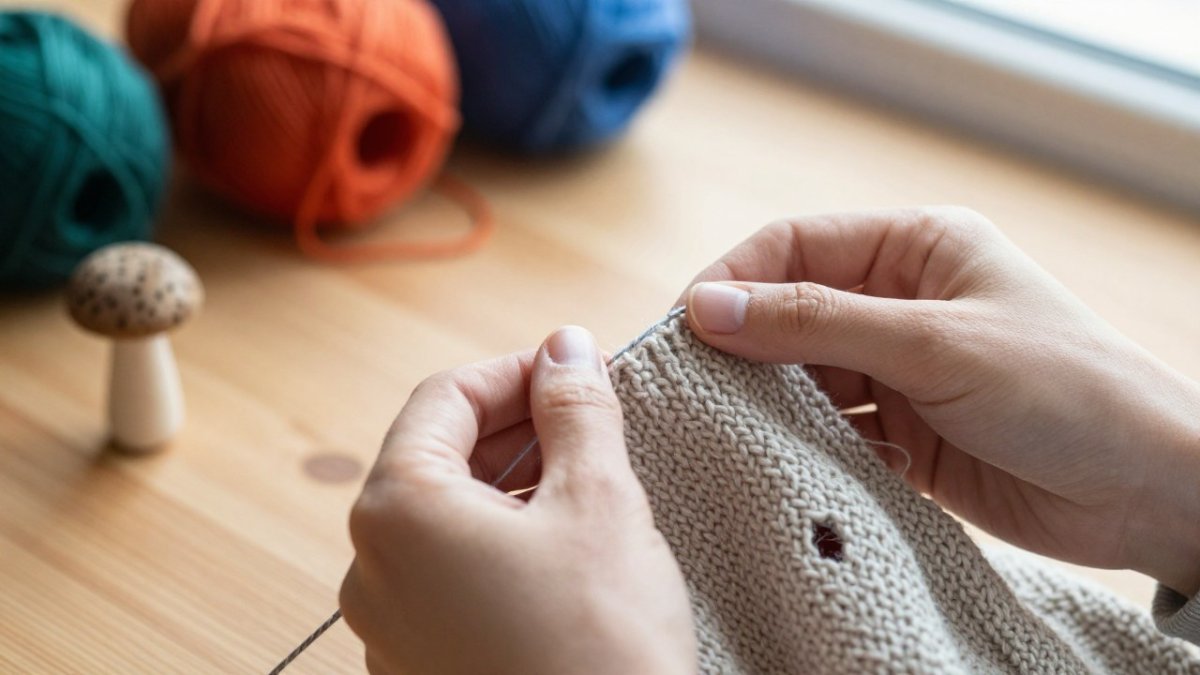
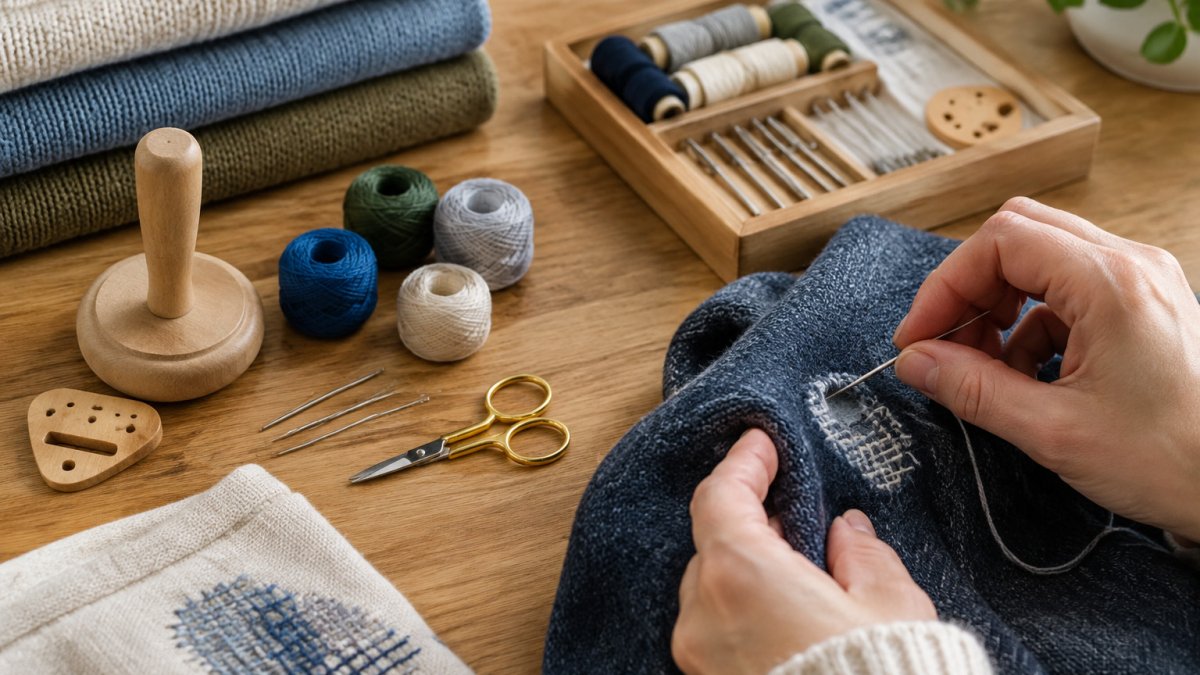
What you need:
- A darning mushroom or a small smooth object
- A darning needle
- Yarn that matches your garment
- Scissors
Steps:
- Place the mushroom inside the garment under the hole.
- Lay the thread across the hole, leaving a small tail at the edge.
- Weave the needle over and under the existing stitches, moving across the hole.
- Repeat the rows, staggering them so the patch lies flat.
- Finish by tucking the ends back into the fabric and trimming them.
Take your time. For a complete beginner-friendly walkthrough of hand-repairing holes, see hand-repair techniques in depth. Neat, even rows matter more than speed. Most beginners find a few practice rounds on an old sock helps a lot. For a dedicated step-by-step guide to closing a hole, see darning a hole from start to finish.
Sashiko Mending for Reinforcing Worn Areas
Sashiko is a Japanese stitching method that reinforces fabric with running stitches. The rows create a strong, visible pattern. It suits denim, workwear and thin cotton.
Use a heavier thread than the fabric and keep stitches evenly spaced. Work from the back of the garment when you can, so the pattern shows on the outside as a deliberate design. Sashiko mending works best on worn areas you want to strengthen rather than hide. For a full beginner's guide to the method, read sashiko mending basics.
Measuring the Environmental Savings of Longer Wear
Keeping a garment longer saves resources, but the exact amount depends on the item, how it is made, and how it is cared for. The 2023 study on maximum clothing use estimate of 20-30% lower footprints for nine extra months of use is a useful starting point, not a guarantee for every item. To make that estimate meaningful, connect it to the actions you take.
What Longer Wear Actually Saves
Every garment carries embedded impacts from fiber production, fabric manufacturing, dyeing, and assembly. Those impacts are already spent by the time you wear the item. Extending its life spreads those impacts over more wears, which lowers the impact per wear. The same logic applies to water, energy, and waste: the resources used to make the garment are not repeated, and the item is kept out of the waste stream for longer.
A simple way to see the effect is to compare two habits over a year:
- Short wear: A jumper worn 30 times and replaced after one season has a high impact per wear because the manufacturing footprint is divided by only 30 wears.
- Long wear: The same jumper worn 90 times over three years has roughly one-third the impact per wear, assuming similar care.
This is why care actions that add even a few months of wear matter. They do not eliminate the original footprint, but they spread it across more uses and delay the need for a replacement.
Track Your Own Wear and Care
You do not need a calculator to apply this. Count how many times you wear each frequently used garment, how long it lasts, and how often you replace it. Over a year, the difference between replacing a jumper every season and keeping it for three years is large.
A practical tracking method is to keep a simple note on your phone or a calendar: mark each wear and note any repair or wash. After a few months, you will see which garments get the most use and which care actions keep them in rotation.
Watch out: Impact estimates vary widely by fiber type and manufacturing region, so treat any single percentage as a directional guide rather than a precise measurement for your wardrobe.
The article's comparison of short and long wear makes the savings concrete, so here is a quick summary of the key figures and claims.
| Claim | Figure | Source note |
|---|---|---|
| Extra months of use | Nine months | 2023 study on maximum clothing use |
| Footprint reduction | Around 20-30% | Same 2023 study estimate |
| Short-wear example | 30 wears, one season | Jumper replaced after one season |
| Long-wear example | 90 wears, three years | Roughly one-third the impact per wear |
| Old clothes recycled into new | Less than 1% | UniformMarket fast-fashion statistics |
Start Your Repair Kit for the Garments You Wear Most
Begin with the clothes you reach for most. Gather basic supplies: needles, a few colors of thread, a darning mushroom, small scissors and a patch or two. To choose the right supplies for your kit, see clothing repair kit buyer's guide.
At Funalya, we make beginner-friendly darning kits and speed looms designed for this kind of everyday repair. Check our product pages for current options and prices, since costs depend on the kit you choose.
Keep your kit somewhere visible. The easier it is to grab, the more likely you are to fix things early. Every repair keeps a favorite garment in rotation for longer.
Frequently Asked Questions
How can I extend the life of clothes I wear frequently?
Wash less often, use cooler water, air-dry instead of tumble-drying, and follow the care label for each fabric. Repair small holes and seam splits as soon as they appear, before they grow. Keeping clothes in use for longer can meaningfully reduce carbon, waste, and water footprints. Small habits applied to your most-worn pieces make the biggest difference because they absorb the most wear.
Can mending clothes make them last longer?
Yes. Repairing and repurposing are practical ways to extend clothing lifetime and reduce environmental impact. Mending a small hole or reinforcing a thinning elbow keeps a garment in rotation instead of sending it to a bin. Start with the items you wear most, since they are the ones that will otherwise be replaced first. Simple hand stitching is usually enough for everyday repairs.
How do I repair thinning fabric or small holes in clothing?
For small holes, use darning: weave new thread across the gap, working over and under the existing fibers to rebuild the fabric. For thinning areas, sashiko mending adds a reinforcing layer of running stitches on the back or front. Choose thread that matches the garment's weight and fiber where possible. Work slowly, keep tension even, and test on a hidden seam first if the fabric is delicate.
How often should frequently worn clothes be washed?
Many garments can be worn several times before washing, especially outerwear, jeans, and knitwear. Spot-clean stains, air out pieces between wears, and wash only when needed. Washing and drying practices can significantly affect physical lifespan, so reducing unnecessary cycles helps protect fibers. When you do wash, use a gentle cycle, cool water, and avoid high-heat drying.