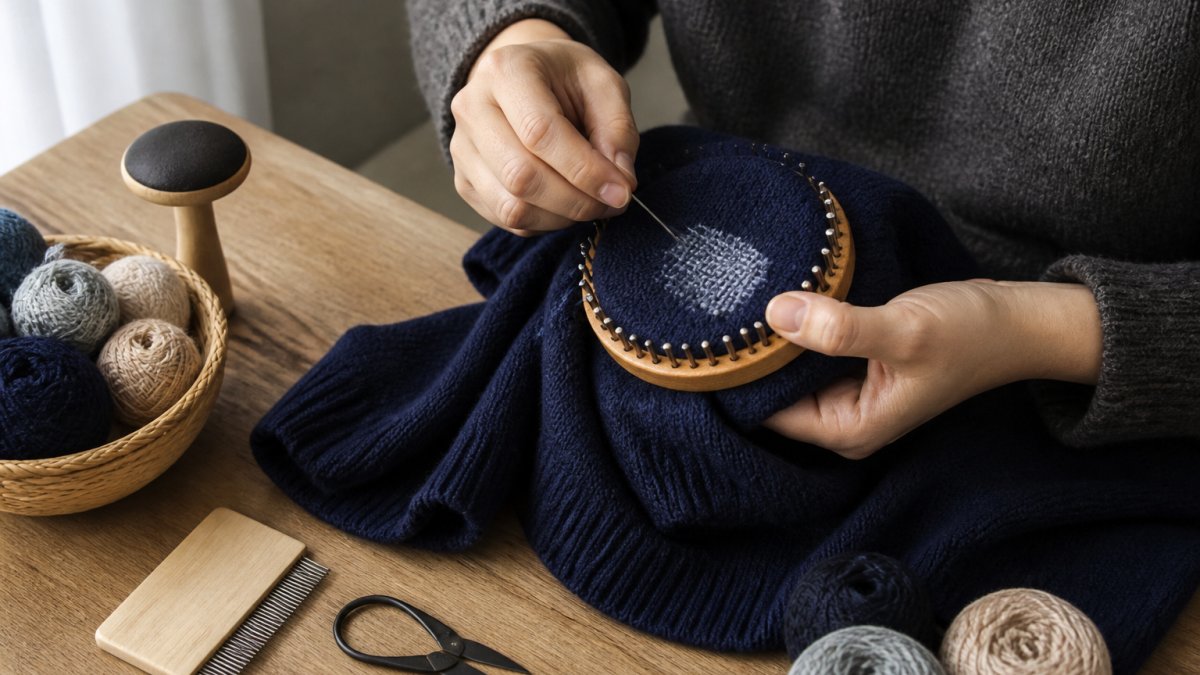
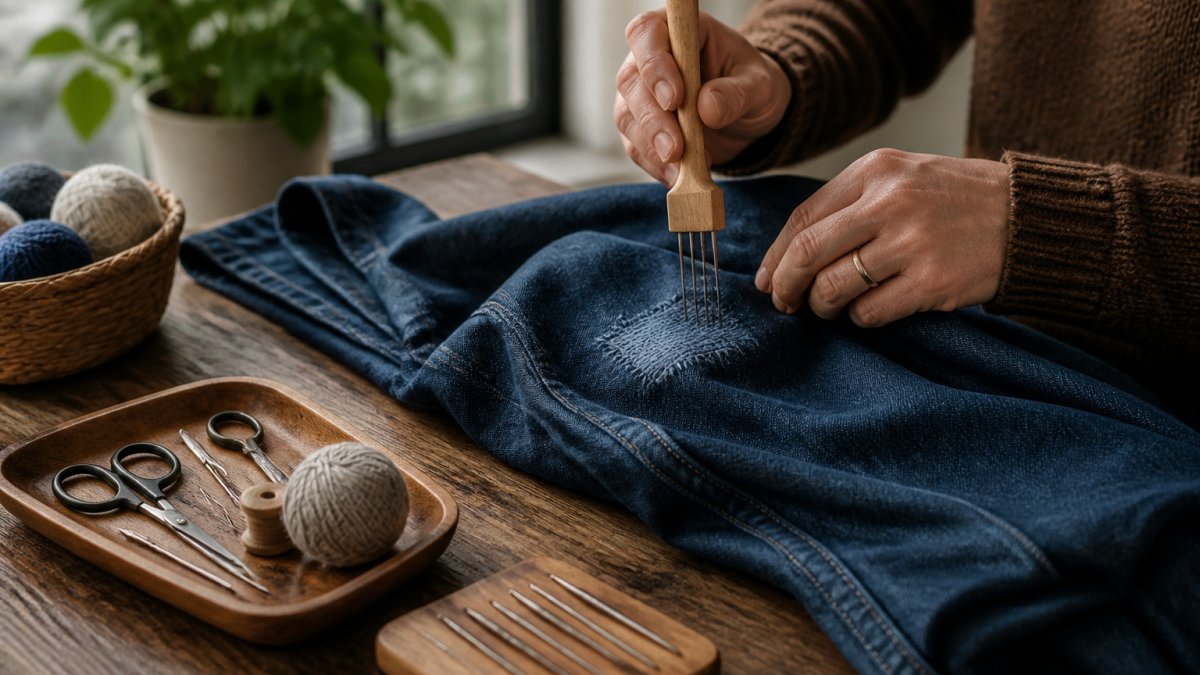
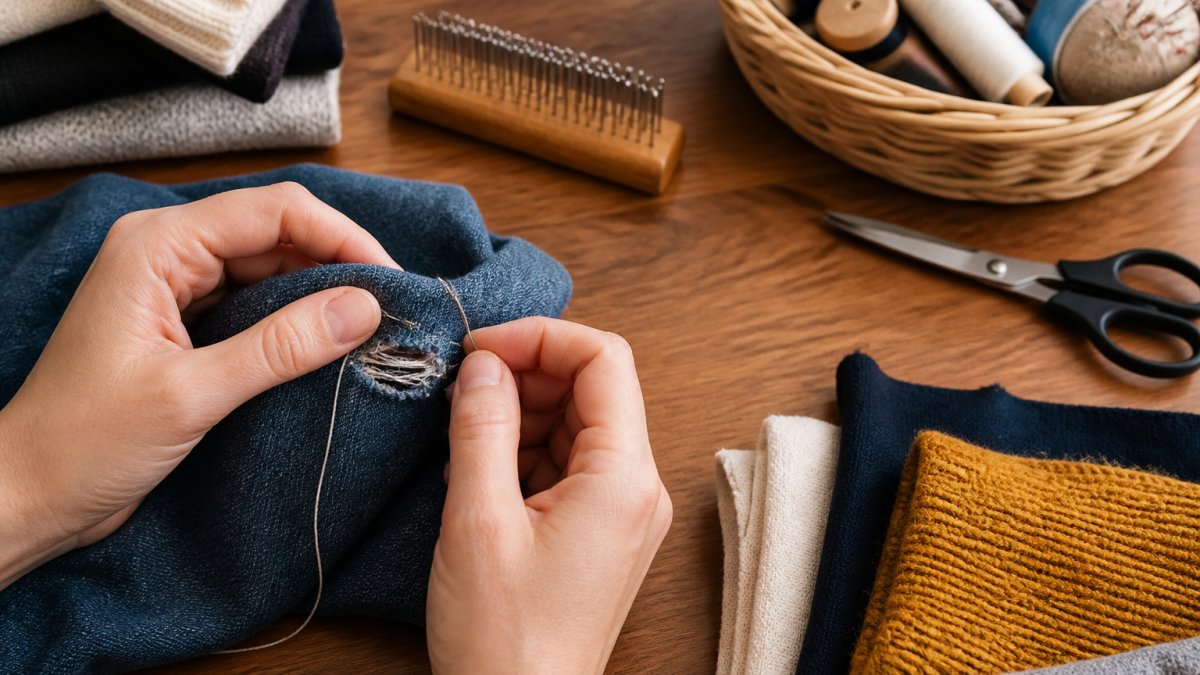
 comparison
Is a Darning Loom Worth It for Clothes? An Honest Review
Last Updated: November 2, 2026
Quick Summary
A darning loom is worth it for clothes if you repair small holes and worn patches often, want neat woven results, and prefer a repeatable process over freehand stitching. Funalya's beginner-friendly kits are designed around exactly that use case. If you mend once a year, a needle and thread will do.
- A loom works best on small holes in knitwear, socks, denim, cotton, and linen.
- A darning needle wins on flexibility, portability, and cost for odd shapes.
- A darning egg holds fabric from underneath; a loom holds it taut from above.
- Divide the loom's price by the repairs you expect to complete in a year.
- Keep fabric firm, not drum-tight, to avoid stiff, puckered patches.
Table of Contents
- The Verdict: When a Darning Loom Is Worth It (and When It Isn't)
- How to Use a Darning Loom for Beginners: Setup, Warping, and Weaving
- What Can You Mend with a Darning Loom?
- Darning Loom vs Darning Needle: Which Repair Method Wins?
- Darning Egg vs Darning Loom: Choosing the Right Tool for the Job
- Cost vs Value: Does a Darning Loom Save You Money?
- Choosing the Right Loom Size and Fabric for Your Repairs
- Start Mending Today with Funalya's Beginner-Friendly Kits
- Frequently Asked Questions
The Verdict: When a Darning Loom Is Worth It (and When It Isn't)
A darning loom is worth it for clothes if you repair small holes and worn patches often, want neat woven results, and prefer a repeatable process over freehand stitching. Funalya's beginner-friendly kits are designed around exactly that use case. If you mend once a year, a needle and thread will do.
Here is the honest split. Buy a loom when you face small holes in knitwear, socks, denim, or cotton, and when you want a woven patch that looks deliberate rather than improvised. Skip it when the damage is huge, when the fabric is delicate and stretchy, or when a repair needs to be invisible against sensitive skin.
That last point matters more than most reviews admit. A common mistake is assuming a loom suits every garment. A discussion on Sewing Pattern Review about darning loom experiences notes that loom-made frames can look obvious and leave ridges that feel uncomfortable on sensitive feet. That is one person's forum comment, not a controlled test, but it flags a real trade-off: a woven darn is structured and visible by design.
Below, we break down setup, fabric suitability, and cost so you can decide with your eyes open.
How to Use a Darning Loom for Beginners: Setup, Warping, and Weaving
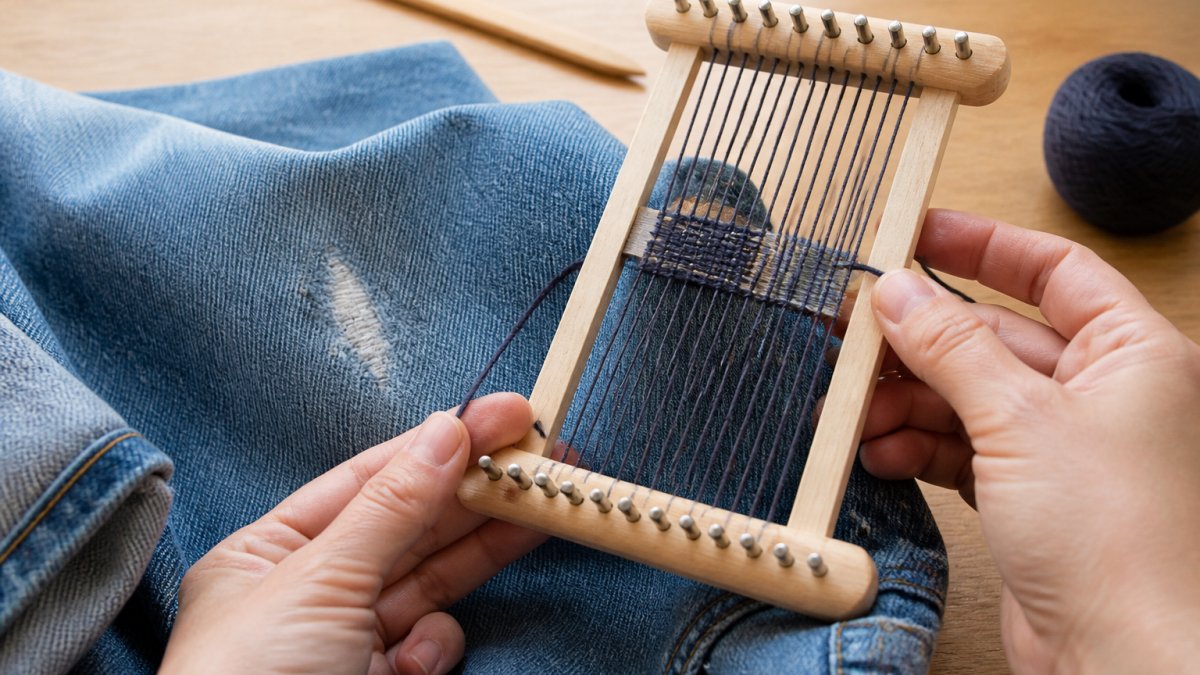
A darning loom is a small hand tool with metal hooks that holds fabric taut while you weave horizontal and vertical threads across a hole.
Here is the beginner sequence we recommend:
- Turn the garment inside out and trim loose threads around the hole so the edges sit flat.
- Secure the fabric over the loom's base, centering the hole under the hooks.
- Push the hooks down and stretch the fabric gently until it sits firm but not distorted.
- Warp the loom by looping thread from hook to hook in vertical rows across the hole.
- Weave the weft by passing the needle over and under the warp threads in horizontal rows.
- Pack the rows close together with the needle so the woven patch is dense.
- Release the hooks and check the tension before trimming the ends.
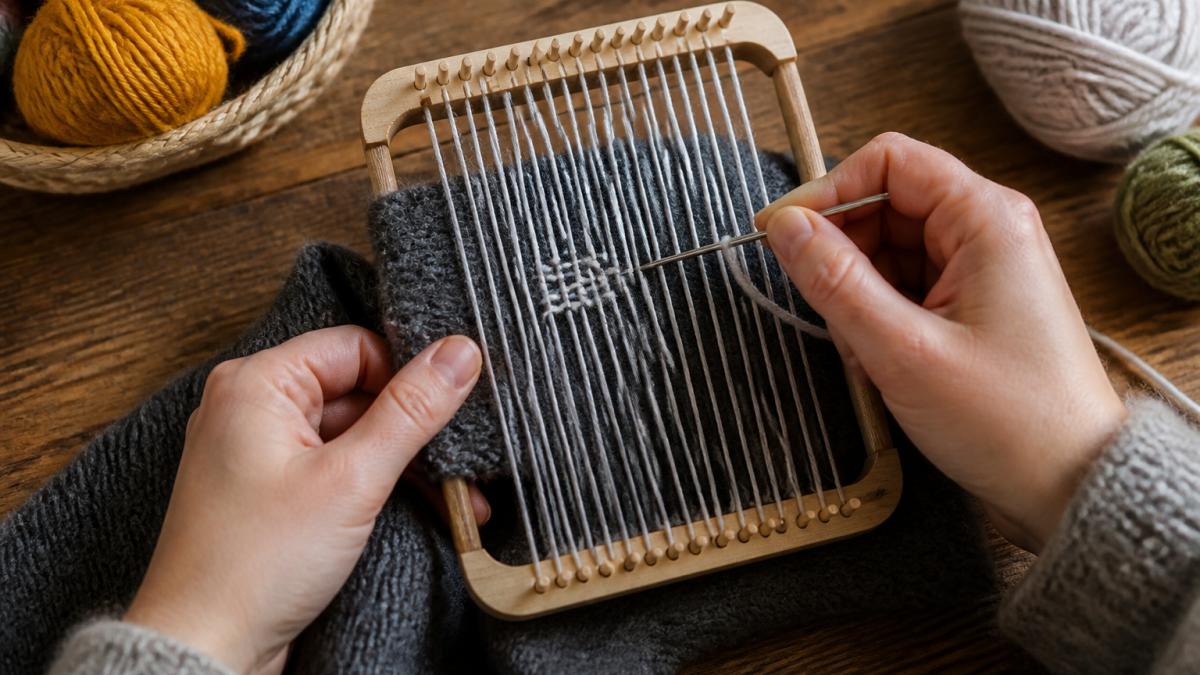
Fabric tension is where beginners struggle most. Pull too tight and the repair puckers; leave it loose and the weave sags. If you want a slower walkthrough with more detail, our guide on how to use a darning loom for beginners covers each step in depth.
What Can You Mend with a Darning Loom?
You can mend small holes, thinning areas, and worn patches in knitwear, socks, denim, cotton, and linen. The loom works best on stable fabrics where a woven patch can anchor to sound threads on every side.
Think of it as a tool for small holes and modest worn areas. A few good candidates:
- Sock heels and toes with a small round hole
- Sweater elbows with thinning knit
- Denim knees with a worn spot before it becomes a tear
- Cotton shirts with a pinhole near a seam
Larger tears and shredded areas usually need a patch or a different repair technique. If you are new to mending generally, our beginner's guide to repairing clothes explains the wider set of methods before you commit to one tool.
Darning Loom vs Darning Needle: Which Repair Method Wins?
A darning loom wins on speed and consistency for repeated small repairs; a darning needle wins on flexibility, portability, and cost. The right answer depends on how often you mend and how much you care about a uniform woven look.
Needle darning is just a needle and thread, worked freehand to rebuild the fabric. It handles odd shapes, tiny holes, and curved seams that a rigid loom cannot reach. It is also the cheapest way to start.
A loom trades that flexibility for a repeatable frame. Once the fabric is secured, the hooks hold the warp threads evenly, so your rows stay straight without practice. The trade-off is that you are limited to what fits under the hooks.
| Method | Best For | Speed | Cost | Portability |
|---|---|---|---|---|
| Darning loom | Small holes, repeated repairs | Fast once set up | One-time tool purchase | Fits in a drawer |
| Darning needle | Odd shapes, curved seams, tiny holes | Slower by hand | Lowest | Pocket-sized |
| Sewing machine darning | Larger flat areas, if you own a machine | Fast on flat fabric | Machine cost | Not portable |
If socks are your main repair target, our guide on how to darn socks shows how needle darning handles the heel and toe shapes a loom struggles with.
Darning Egg vs Darning Loom: Choosing the Right Tool for the Job
A darning egg holds the fabric from underneath while you stitch; a darning loom holds it taut from above while you weave. They solve different problems, and many menders eventually own both.
The egg is a smooth, rounded form you slip inside a sock or sleeve so the fabric has a firm surface to work against. A loom, by contrast, creates the woven patch itself and needs the damaged area to sit flat under its hooks.
Choose the egg for curved, tubular repairs and quick freehand stitching. Choose the loom for flat or flattenable areas where you want a structured woven repair. Neither is "better"; they cover different damage types.
Cost vs Value: Does a Darning Loom Save You Money?
Whether a darning loom saves money depends on how many repairs you complete compared with the cost of replacing those garments.
Total cost to get started.
The payback calculation. The honest test is to count how many holey items are already waiting in your drawer.
What the loom does not save. It does not eliminate the cost of yarn or thread, and you may still need a patch or a different method for large tears.
The hidden value most guides miss. A loom makes mending pleasant enough that you keep doing it. That behavioral effect is hard to price, but it is the difference between a tool that sits in a drawer and one that keeps garments in rotation. If you are weighing a full kit rather than a single tool, our clothing repair kit buyer's guide breaks down what a complete setup includes so you can compare like for like. For current Funalya pricing, check our product pages directly.
Choosing the Right Loom Size and Fabric for Your Repairs
Loom size should match the size of your typical repair, not the size of your wardrobe. A mini darning loom handles sock heels and small holes; a larger loom gives you room for sweater elbows and wider worn areas. But size is only half the decision.
A practical suitability matrix. Use this as a starting point, then test on a scrap before committing to a favorite garment.
| Fabric / garment | Small hole | Worn patch | Large tear | Notes |
|---|---|---|---|---|
| Knitwear (wool, cotton knit) | Good | Good | Poor, use a patch | Keep weave slightly loose; match yarn weight |
| Socks | Good on heel/toe | Fair | Poor | Curved shapes can be awkward under hooks |
| Denim | Good | Good | Fair, may need backing | Stable fabric takes a woven repair well |
| Woven cotton | Good | Good | Fair | Pinholes near seams are ideal candidates |
| Linen | Good | Fair | Poor | Can fray; secure edges first |
| Delicate stretchy fabric | Poor | Poor | Poor | Loom tension can distort the fabric |
Durability and washing. A woven darn is structured and visible by design, and its longevity depends on tension and yarn choice. Turn the garment inside out, use a gentle cycle, and avoid high heat in the dryer, which can shrink or felt some yarns. Check the patch after the first wash, if rows have shifted, repack them with a needle before the next wear.
When the loom is the wrong tool. A woven darn does not stretch, so it can fight against stretchy knitwear. Stable fabrics like denim, cotton, and linen take a woven repair well. Our guide on darning techniques for wool sweaters covers matching yarn and tension for knitwear specifically.
A simple rule we use: small loom for small holes, larger loom for wider worn sections, and always test your tension on a scrap before you commit to a favorite garment.
Start Mending Today with Funalya's Beginner-Friendly Kits
The real question is not whether a darning loom is clever. It is whether you will use it. If you have a drawer of thinning sweaters and holey socks waiting for attention, a loom turns that pile into a weekend project instead of a shopping trip.
We built Funalya for exactly this: beginner-friendly repair tools that make garment repair approachable, with useful accessories included and support for visible mending. Our kits handle both small holes and larger worn sections. Customers have said they are great for beginners, and one reviewer noted her first attempts were not perfect but she enjoyed using it and will keep practicing.
That is the honest expectation: your first woven patch will not be flawless, and that is fine. The skill builds fast, and every repair keeps a garment out of the waste pile.
Get started with Funalya and give your favorite worn pieces another season in rotation.
Frequently Asked Questions
Is a darning loom worth buying for clothes?
It depends on how often you repair and what you wear. A darning loom pays off if you regularly fix holes in denim, cotton, or linen and want neat, woven patches that hold up to washing. For occasional repairs on stretchy knitwear, a needle and darning egg may be enough.
What types of clothing can you repair with a darning loom?
A darning loom works best on stable, non-stretchy fabrics like denim, cotton canvas, linen, and lightweight wovens. You can also use it on knitwear, but the woven patch won't stretch with the garment, so reserve it for areas that don't flex much. It handles small holes, worn areas, and thin spots, making it a practical tool for what can you mend with a darning loom.
Is a darning loom easier to use than a darning needle?
For beginners, a darning loom can be easier because the hooks hold warp threads evenly, so you don't need to stitch each strand by hand. A darning needle gives you more control for curved or delicate repairs but takes practice to keep tension consistent. If you are learning how to use a darning loom for beginners, expect a short learning curve, then faster, more uniform results on straight holes.
Do you have to use all the hooks on a darning loom?
No. You can use only the hooks needed to span the hole or worn area. For a small tear, warping a few hooks on one side is fine; for larger repairs, use more hooks to cover the width. The extra hooks stay out of the way, so a larger loom can handle both small and big jobs without requiring multiple tools.
How does a darning loom compare to a darning egg?
A darning egg is a smooth, rounded form you hold under the fabric to support needle darning; it's simple, portable, and cheap. A darning loom holds warp threads under tension and lets you weave a patch, which gives more consistent, durable results on flat fabric. The darning egg vs darning loom choice comes down to whether you prefer freehand stitching or a structured woven repair.